
Grow Spring Indoors: Easy Guide to Forcing Bulbs
Do you need to chase the winter blues away? How about bringing some spring indoors with my easy guide to forcing bulbs?
I have been doing this for years at home. About mid-February, I begin to long for the spring season. I love it when you look outside, and everything begins to turn green. Maybe it is why I love shades of green so much.
Forcing bulbs indoors is my antidote to the winter blues. There’s nothing quite like replacing dreary winter days with the vibrant colors and cheerful blooms of spring flowers. Watching them emerge always makes me smile, instantly lifting my spirits.
Here is my simple process of coaxing dormant beauties into early blooms. Why not fill your home with lovely fragrances and eye-catching flowers?
It is time to turn your living area into a springtime sanctuary with the beauty of forced bulbs. Let’s begin!
EASY GUIDE TO FORCING BULBS
What flowers can be used for indoor bulb forcing?
Below are some of the flowers that you can force bulbs to bloom:
- Amaryllis – The flowers range from 4 to 10 inches in size and can be either single or double blooms. The most popular colors are red and white, flowers may also be pink, salmon, apricot, rose or deep burgundy.
- Paperwhites—These flowers are relatives of daffodils and jonquils and are easy to grow indoors. They produce small, fragrant flowers on tall 12—to 18-inch stalks.
- Crocuses – These flowers come in purple, yellow, lavender, cream, and white. Over time, these carefree bulbs will naturalize and multiply to produce more flowers yearly.
- Daffodils – Classic spring flowers with cheerful yellow, orange, or white blooms.
- Grape Hyacinths – Small grape-like clusters of blue, purple, or white flowers.
- Hyacinths – Fragrant flowers in various colors, known for their intense scent.
- Tulips – There are various colors and shapes, from single cups to fringed petals.
Pre-Chilling or Chilling Time
Chilling time” or “pre-chilling,” is crucial in preparing bulbs to bloom indoors. This process involves storing the bulbs in a cool environment, typically between 35-45 degrees Fahrenheit (2-7 degrees Celsius), for 10-12 weeks. This mimics the natural cold period that bulbs experience in the ground, triggering their growth cycle.
Here’s a more concise and informative way to explain “chilling time” or “pre-chilling” for forcing bulbs:
Chilling time” or “pre-chilling,” is crucial in preparing bulbs to bloom indoors. This process involves storing the bulbs in a cool environment, typically between 35-45 degrees Fahrenheit (2-7 degrees Celsius), for 10-12 weeks. This mimics the natural cold period that bulbs experience in the ground, triggering their growth cycle.
To chill bulbs:
- Place them in a brown paper bag with a small amount of slightly moist soil or vermiculite.
- Store the bag in a cool location, such as an unheated garage, shed, or the refrigerator’s crisper drawer.
The specific chilling requirements may vary depending on the bulb type, so refer to the chart above for details.
My garage is the perfect place where I do the pre-chilling. Once your flower bulbs have been pre-chilled, you can start forcing bulbs indoors in either water or soil. I do not use the water method. I like to use the soil method.
Bulbs that require chilling time:
- Crocuses – 8-10 weeks of chilling at 35-40°F (1-4°C).
- Daffodils – 12-16 weeks of chilling at 35-40°F (1-4°C).
- Grape Hyacinths – 8-10 weeks of chilling at 35-40°F (1-4°C).
- Hyacinths – 10-12 weeks of chilling at 40-45°F (4-7°C).
- Tulips – 12-16 weeks of chilling at 35-40°F (1-4°C).
How To Force Bulbs For Beginners
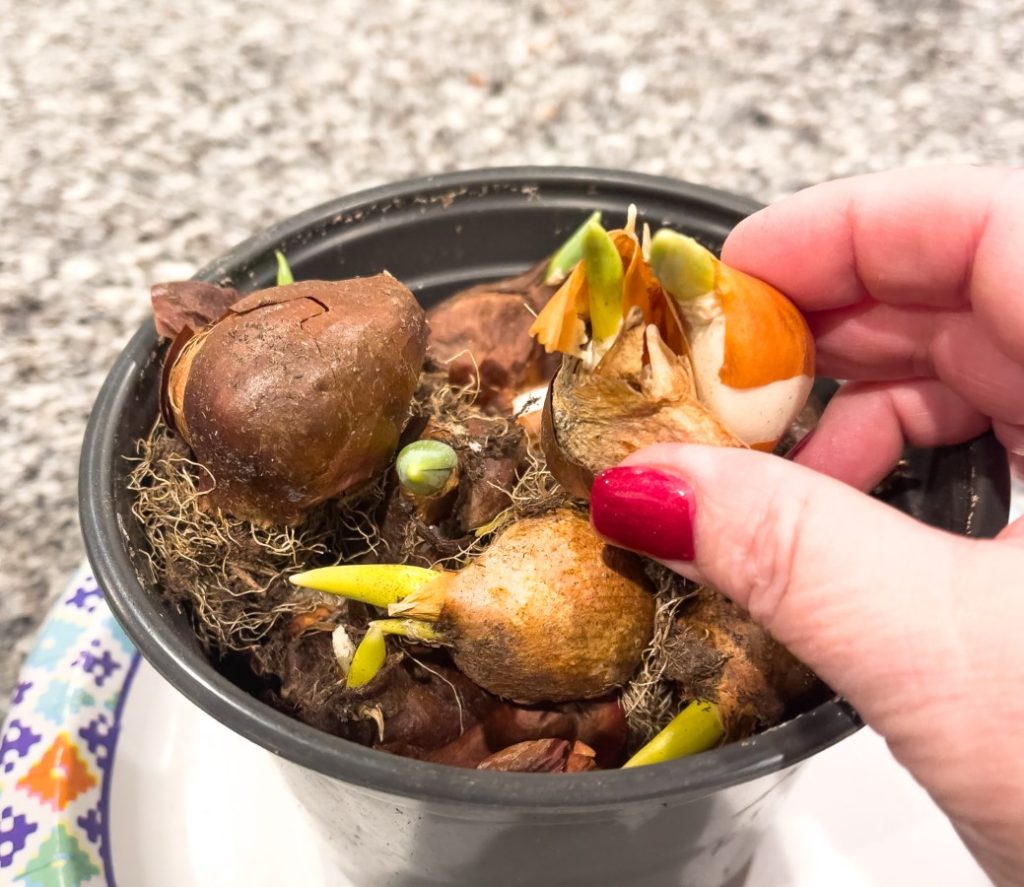
It is important to start by selecting firm, healthy bulbs. You do not want unhealthy bulbs that may rot or are diseased to spread to other bulbs.
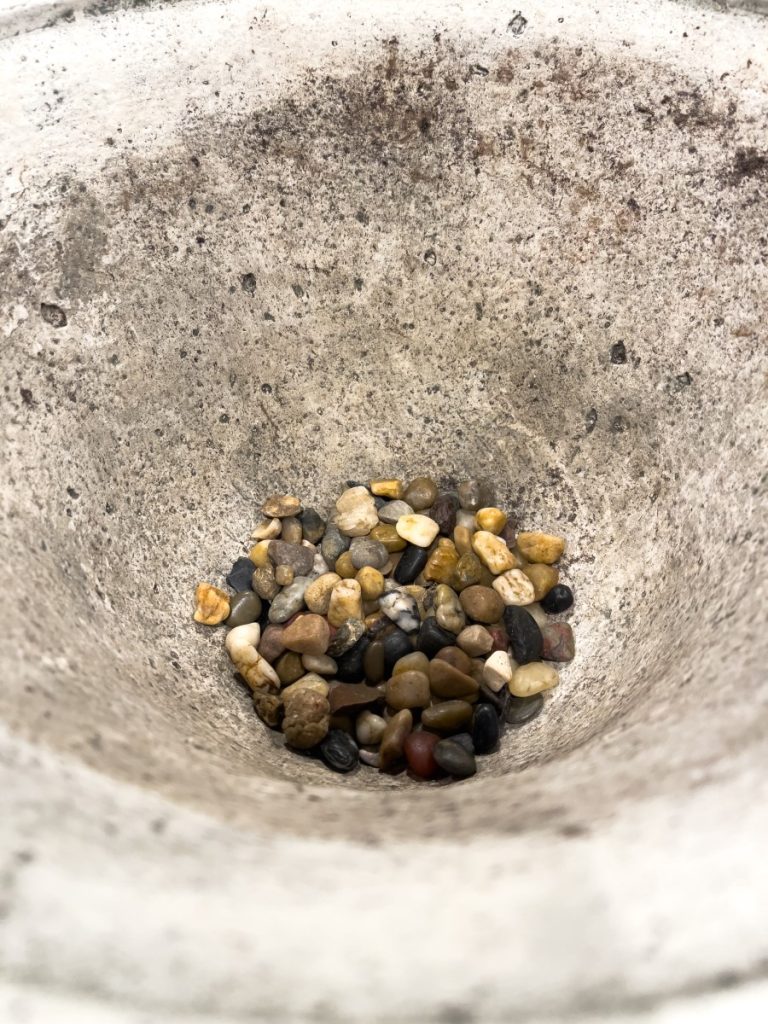
Begin by placing some small gravel at the bottom of your pot or dish.
Add light, well-draining potting mix (you buy it in a bag).
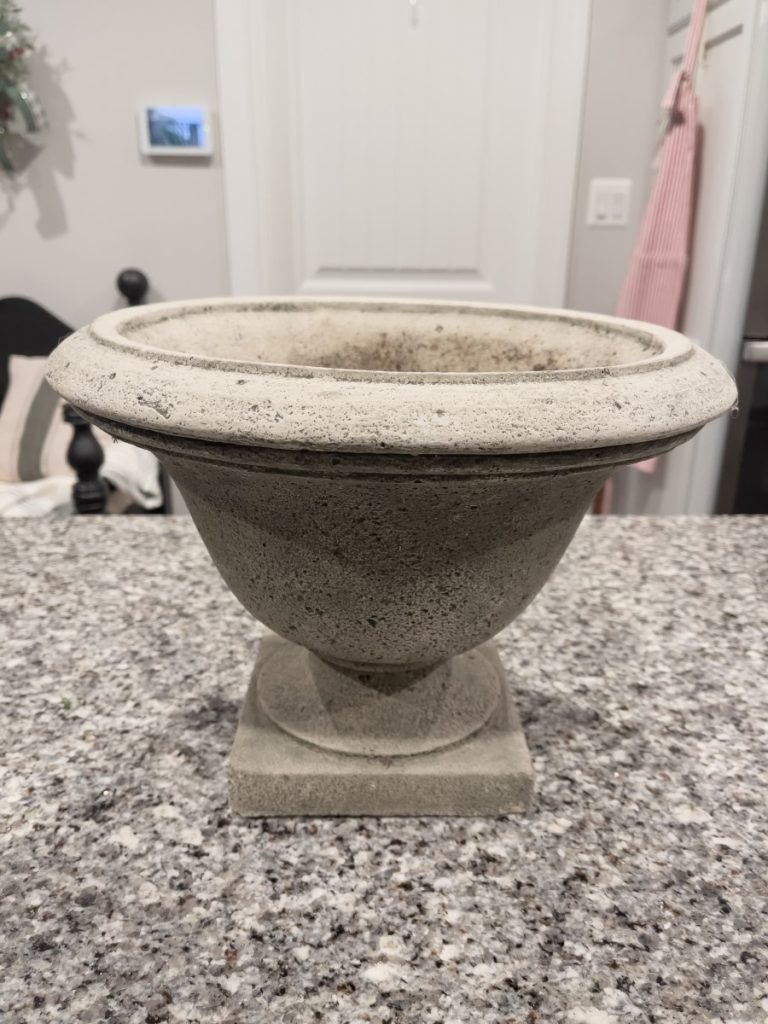
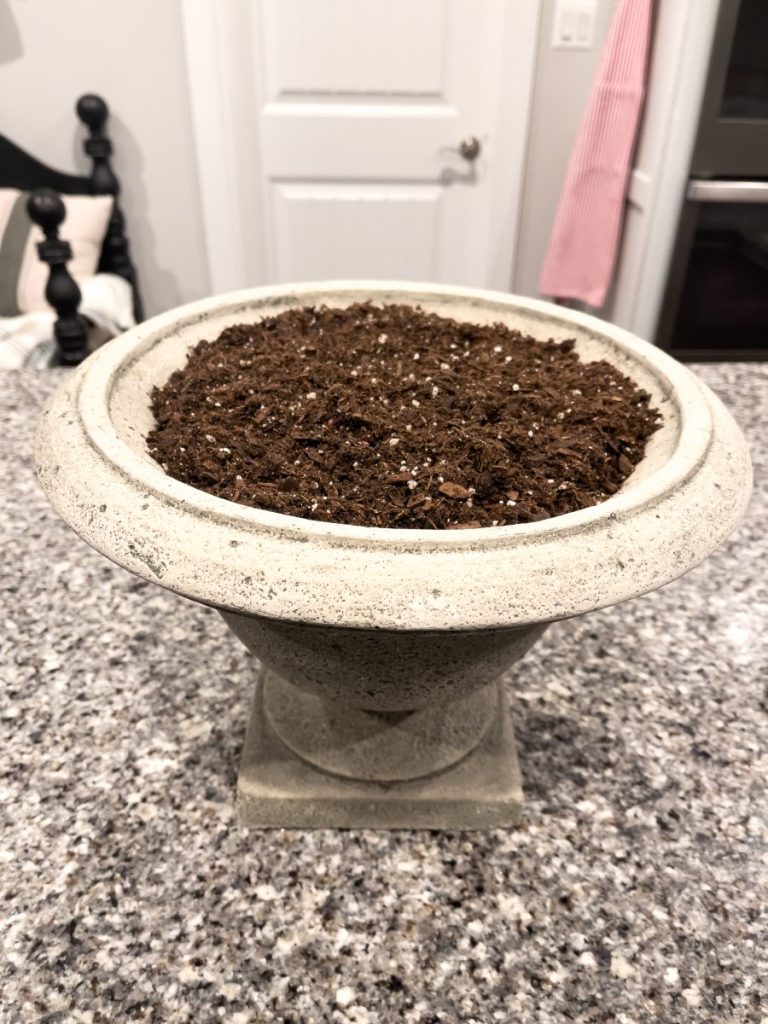
Plant your bulbs, leaving the top 1/3 exposed. The pointy tops of the bulbs should be out of the soil.

The number of bulbs you plant depends on the size of your container.
- For a large soup tureen, I recommend planting three bulbs.
- For a larger vessel, such as a concrete planter with an 11-inch circumference, you can plant 5-7 bulbs.
- I’ve successfully used six tulip bulbs in a planter of that size. Here’s a slightly more refined version:
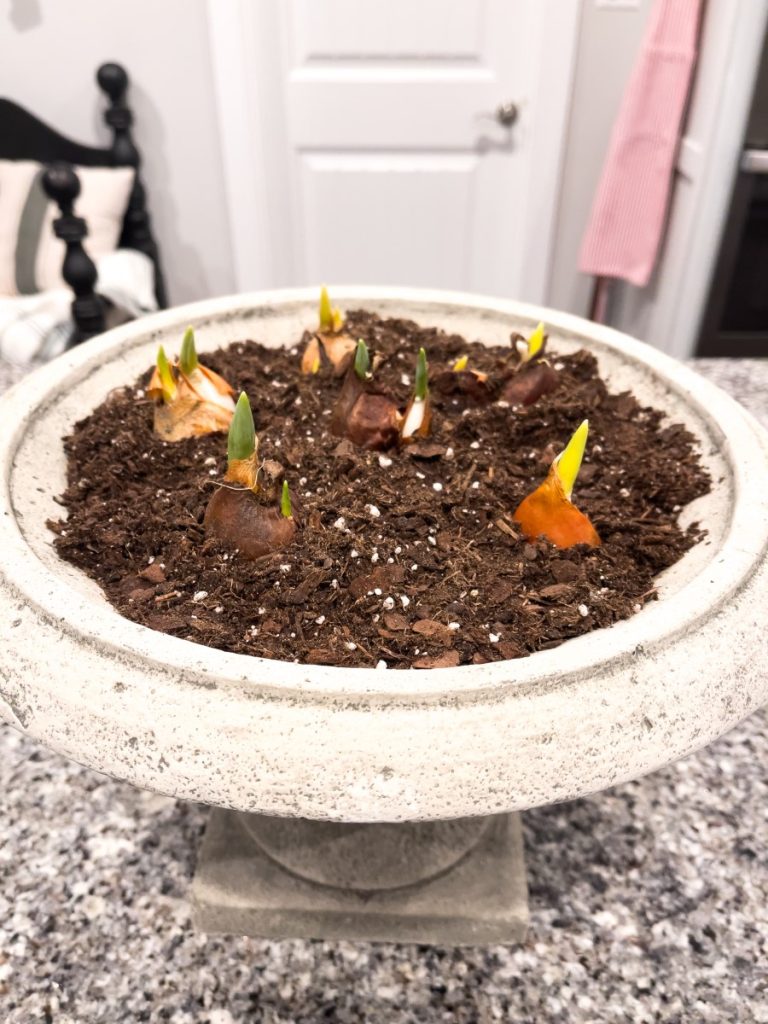
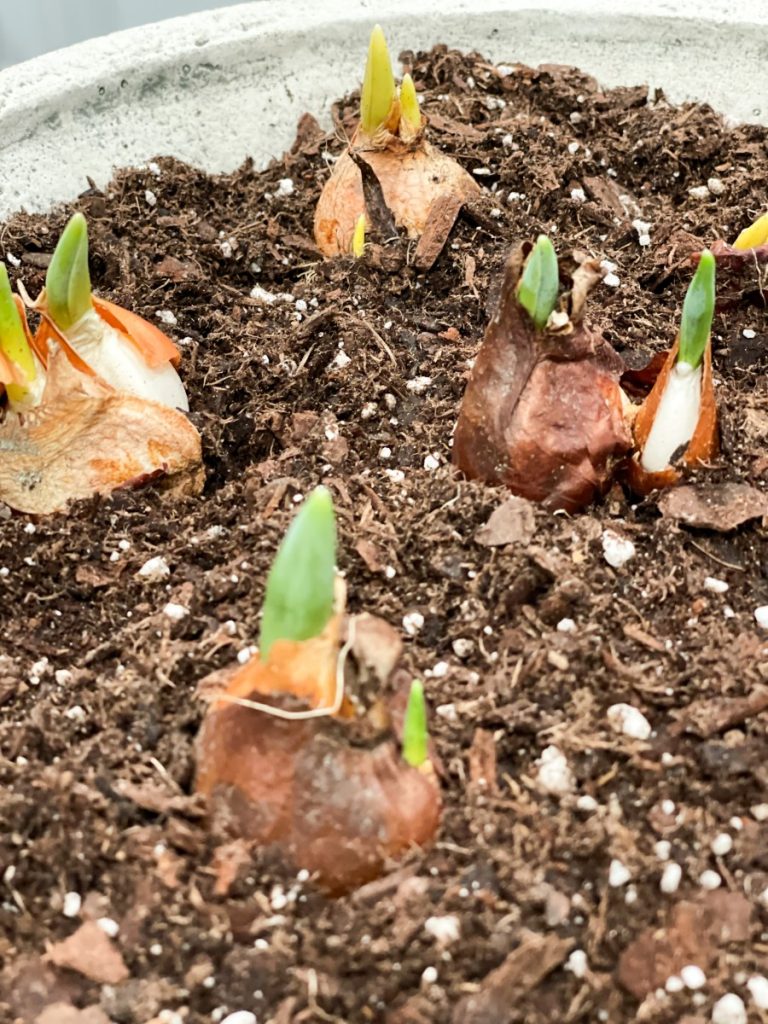
Hyacinths are my favorite because their fragrance fills a room. I would only use two bulbs in a large vintage soup tureen (6.5″ opening). If you use smaller Grape Hyacinths or Daffodils, you could fit five bulbs. Again, it will depend on the circumference of the vessel that you are using in the home.
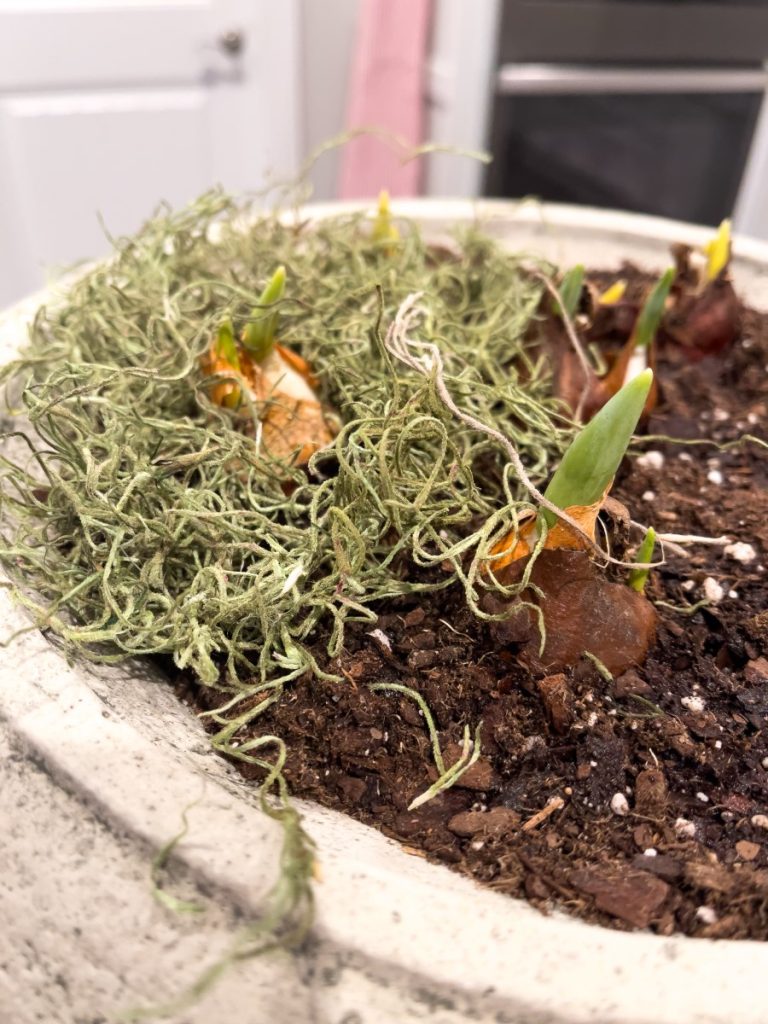

You can dress up the top and around the bulbs with Spanish Moss in a color or use the natural color. Moss also looks beautiful, covering the potting soil.
Caring For Your Spring Bulbs Indoors
Water the bulbs and keep the soil moist but not soggy. When the leaves begin to sprout, move the pot or vessel to a bright, warmer location. These types of flowers prefer bright, indirect light. Avoid putting this in direct sunlight. The temperature should be around 60°F or 15°C.
Pro Tip for Paperwhites: To keep the stems from growing too tall and flopping over, water with a 1:1 ratio of water to vodka. You start this mixture once the bulbs are well established and begin to grow.
ENJOY THE PROCESS

Here are some White Hyacinths that I forced last year. These two plants in the vintage soup tureen filled my entire home with a wonderful fragrance.
With a little planning and care, you can enjoy the reward of brightening your days and outwitting old man winter by bringing spring indoors. Plus, the beauty of the burst of color and the incredible fragrances will definitely lift your spirit. So, let’s bring a little bit of spring indoors!

Enjoy the reward of brightening your days and lifting your spirits all winter long. Now, choose your bulbs, gather your supplies, and get ready to witness the wonder of spring unfolding right inside your home! You may want to read this post: Spring Decorating Ideas: How to Decorate With Plants and Flowers.
Be sure to share your experience with me. I love hearing from my readers.
You May Enjoy


Here are some key takeaways to remember from this guide:
- Choose bulbs that are suitable for forcing, such as tulips, daffodils, hyacinths, and crocuses.
- Select firm and healthy bulbs that are free from blemishes or mold.
- Provide a chilling period for the bulbs to simulate winter conditions.
- Plant the bulbs in well-draining pots with a good quality potting mix.
- Water the bulbs regularly, but avoid overwatering.
- Place the potted bulbs in a cool, bright location away from direct sunlight.
- Be patient and enjoy the rewarding experience of watching your bulbs sprout and bloom indoors!
With a little effort, you can enjoy the beauty of spring indoors throughout the winter and early spring. So why not give bulb forcing a try? You might be surprised at how easy and rewarding it is!
Hugs,


Love it!! Looking forward to Spring!!!
Thank you, Jennifer. Me too! I love when everything starts to bloom.
I adore the smell of Hyacinth. I wish I had bought bulbs some time ago, but I still need to. I will have to buy some down at the flower mart to enjoy. I typically do paperwhites, but I did not even do that this year! there are just not enough hours in the days.
Don’t they smell wonderful, Wendy. It’s one of my favorite smelling flowers besides Lilacs.
Amaralysis
What do I do
Email me at Whitelilacfarmhouse@gmail. com I can make some recommendations. Amaryllis are beautiful when they bloom.