
Beat the Winter Blues: Indoor Plants And Flowers
With the short days and cold temperatures, it seems like the sun sometimes forgets to shine. Like many of you, I find winter can be a tough time. It may leave you with a lack of energy or the feeling that you are in hibernating mode. What if I told you there’s a simple, natural way to brighten your days and boost your mood? It’s something that has helped me combat the winter blues. Let’s enter the wonderful world of indoor plants and flowers!
Did you know that studies have shown that having plants around can significantly improve our mental and physical well-being? It is true. Plants purify the air we breathe, reduce stress, and even increase our productivity. In this post, we’ll explore the benefits of indoor plants, learn how to force bulbs for a vibrant burst of spring color, create adorable DIY air plant terrariums, and discover the low-maintenance charm of succulents. Let’s bring the garden indoors and chase away those winter blues!
For your convenience, I’ve included affiliate links in this post. These links won’t cost you anything extra but help support my blog so I can keep bringing you free tutorials. Thank you! Please read my full disclosure here.
Indoor Plants And Flowers
The Mental And Physical Benefits of Indoor Plants And Flowers

Plants bring coziness into any room. The beautiful green foliage of plants warms up the room and adds a sense of coziness. Aside from the aesthetics of plants, did you know houseplants offer a multitude of benefits? The NASA Clean Air Study was a project led by the National Aeronautics and Space Administration in association with the Associated Landscape Contractors of America in 1989. The study investigated how plants can naturally filter air in sealed environments like space stations. It found that certain plants can effectively remove harmful pollutants like benzene, formaldehyde, and trichloroethylene from the air. You can read more about it here.

Let’s take a look at why houseplants have mental and physical benefits.
Key factors for mental and physical benefits:
- Improves air quality – Plants purify the air in the home. They collect dust particles from the air, break down harmful substances in the atmosphere, reduce carbon dioxide and convert it into oxygen, and add humidity to improve the quality of the air.
- Reduced stress and anxiety—Plants and greenery in your rooms have a calming effect.
- Increased focus and productivity – Increase creative thinking and productivity.
- Boosted mood and happiness—They help lower blood pressure, making you feel more relaxed and happier, and will boost your mood.
- Connection to nature – Simply seeing greenery indoors brings the outdoors in. It reminds us of natural environments.
- Promotes a cozy and comfortable space—the color alone adds a warm feeling to any space. Plants make the room feel more natural and comfortable.
- It improves the acoustics in your home/noise blockers and can absorb background noise.
- Helps to prevent allergies—Children who have plants in their family home from an early age may have a lower risk of allergies.
- Helps to promote good sleep – Air-purifying house plants create a better air climate in your bedroom and generate more oxygen.
- Care and Nurturing – Caring for plants fosters a sense of responsibility and connection to something living. Watching them grow and thrive provides a sense of accomplishment and a deeper appreciation for the natural world.
- Sensory Experience—Plants provide visual beauty and can offer other senses, such as touch, which allows one to feel the leaves; the smell of pleasant aromas from some plants; and the sound of leaves rustling with a breeze inside the house (hopefully, there is no breeze inside the house during the winter, but you get the point).
What are some of my favorite houseplants? You can read about it in The Secret Weapon for Your Well-being: Why Houseplants Belong in Your Home.
Easy & Adorable: DIY Mini Air Plant Terrariums

DIY Mini Air Plants Terrariums are adorable little ecosystems that are not only trendy home decor but are incredibly easy, affordable, and fun to create. Even the brownest thumb can cultivate a thriving miniature world with these low-maintenance beauties.
They are easy to make with a few supplies. All you need to do is choose a container such as a glass bowl, jar, driftwood, rocks, shells, etc. Since air plants do not need soil to grow, here are some ideas:

Natural Look:
- Driftwood – Attach them with glue or wire for a rustic, beachy vibe.
- Succulent Bowls – Combine air plants with succulents for a unique and interesting display.
- Rocks and Stones – Nestle them amongst rocks and pebbles in a decorative bowl.
- Hanging Baskets – Use wire or string to hang them from baskets or macrame hangers.
Modern and Minimalist:
- Geometric Holders – Display them in geometric terrariums or metal wire sculptures.
- Magnetic Mounts – Attach them to magnetic surfaces like refrigerators or magnetic boards.
- Shelves and Ledges – Simply place them on shelves or ledges for a clean and modern look.
Creative and Unique:
- Seashells – A favorite of mine is to attach to seashells for a beachy, bohemian feel.
- Tree Branches – Secure them to branches for a natural and artistic display.
- Fairy Gardens – A whimsical touch would be to incorporate them into miniature fairy gardens.
- Wreath – You can create a unique terrarium by combining air plants with moss and other small plants.
Regardless of how you choose to display your air plants, ensure that they can receive adequate airflow. Airflow is key for the plants’ survival. Most air plants also prefer bright, indirect light.
For more information about caring for air plants, please read DIY Mini Air Plant Terrariums: Easy, Adorable & Affordable.
Bringing Spring Indoors: Forcing Bulbs
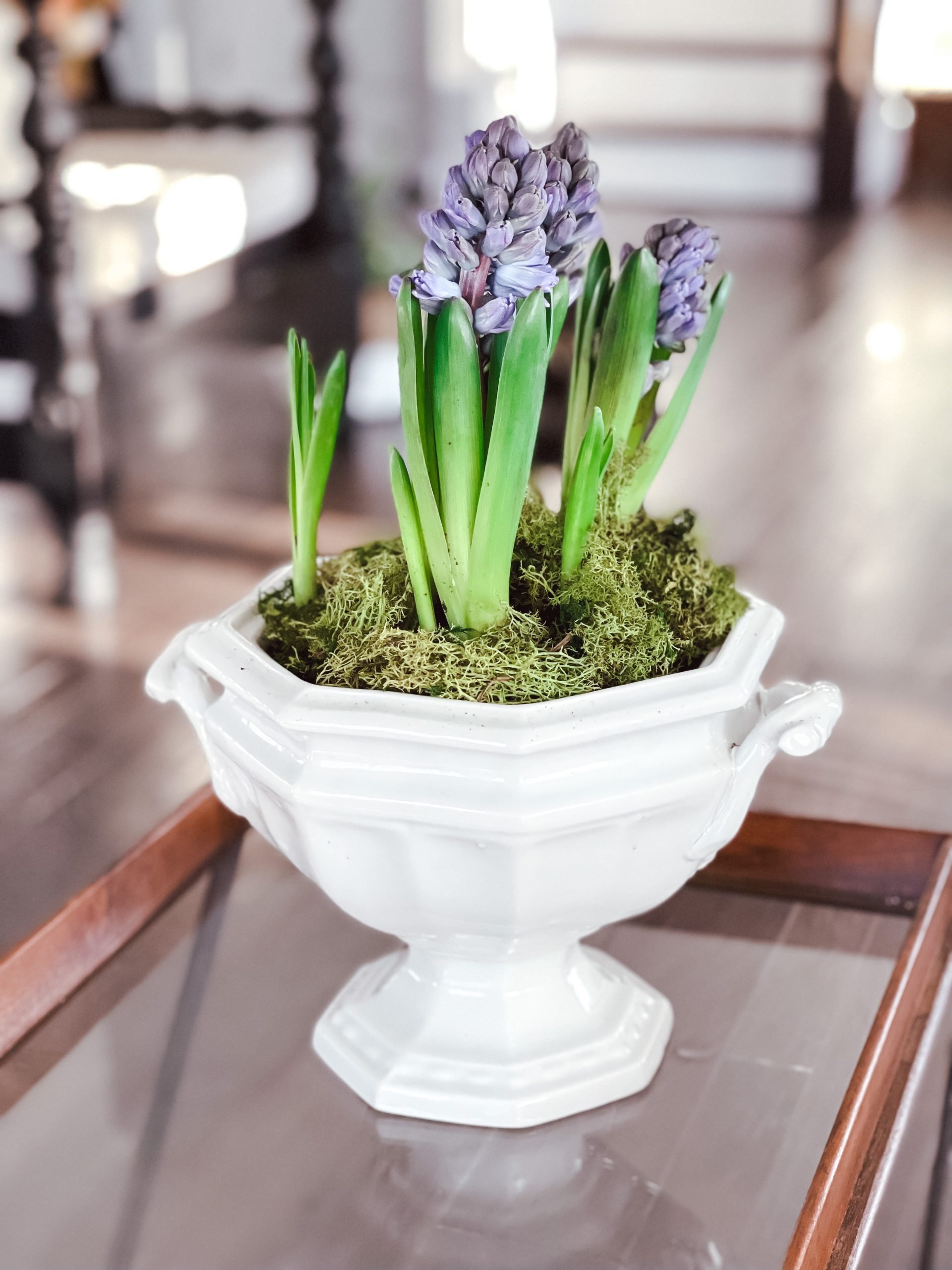
Imagine a burst of vibrant color amidst the winter blues with indoor plants & flowers. Discover the magic of forcing bulbs and enjoy a breathtaking display of spring blooms indoors. What flowers can be used for indoor bulb forcing?
- Amaryllis—The flowers range from 4 to 10 inches in size and can be either single or double. blooms. The most popular colors are red and white, but flowers may also be pink, salmon, apricot, rose, or deep burgundy.
- Paperwhites—These flowers are relatives of daffodils and jonquils and are easy to grow indoors. They produce small, fragrant flowers on tall 12—to 18-inch stalks.
- Crocuses – These flowers come in purple, yellow, lavender, cream, and white. Over time, these carefree bulbs will naturalize and multiply to produce more flowers yearly.
- Daffodils – Classic spring flowers with cheerful yellow, orange, or white blooms.
- Grape Hyacinths – Small grape-like clusters of blue, purple, or white flowers.
- Hyacinths – Fragrant flowers in various colors, known for their intense scent.
- Tulips – There are various colors and shapes, from single cups to fringed petals.
Selecting bulbs: Start by selecting firm, healthy bulbs. You do not want unhealthy bulbs that may rot or are diseased to spread to other bulbs.
Chilling bulbs: Chilling time” or “pre-chilling,” is crucial in preparing bulbs to bloom indoors. This process involves storing the bulbs in a cool environment, typically between 35-45 degrees Fahrenheit (2-7 degrees Celsius), for 10-12 weeks. This mimics the natural cold period that bulbs experience in the ground, triggering their growth cycle. Place them in a brown paper bag with a small amount of slightly moist soil or vermiculite. Store the bag in a cool location, such as an unheated garage, shed, or the refrigerator’s crisper drawer.
Planting: Begin by placing some small gravel at the bottom of your pot or dish. Add light, well-draining potting mix (you buy it in a bag). Plant your bulbs, leaving the top 1/3 exposed. The pointy tops of the bulbs should be out of the soil. The number of bulbs you plant depends on the size of your container. You can dress up the top and around the bulbs with Spanish Moss in a color or use the natural color. Moss also looks beautiful, covering the potting soil.
For a step-by-step planting and caring guide for force bulbs, please see Grow Spring Indoors: Easy Guide to Forcing Bulbs.
Low-Maintenance Beauties: Succulent Plants for Indoors

Succulents are fantastic indoor plants for several reasons: they are low-maintenance, beautiful, and come in a wide array of shapes, sizes, and colors, adding visual interest and beauty to any room.

Succulents are incredibly drought-tolerant, meaning they can go long periods without water. The low water needs make this type of plant perfect for busy people or those who tend to forget to water their plants.
Succulents are easy to care for, thrive in bright, indirect light, and don’t require frequent fertilizing. Some succulents, such as Snake Plants, aloe vera, and Echeveria (a rosette-forming succulent), can help purify the air by removing toxins. The amount of air purification depends on factors like plant size and the number of plants.
Studies have shown that interacting with plants can reduce stress levels and improve your mood. Overall, succulents are a low-maintenance, beautiful addition to any home.
For more information about planting and growing succulents indoors, see this post Succulent Plants for Indoors.
Shop My Favorites

Favorites For Storage & Organization:
You May Also Enjoy

Incorporating indoor plants and flowers into your home can be a truly transformative experience, especially during the challenging winter months. With vibrant blooms of forced bulbs, the effortless beauty of succulents, and the charm of air plant terrariums, there’s something for everyone. Remember, whether the plants are small or large, they will contribute to a healthier, happier you. So, embrace the power of nature, bring the garden indoors with plants & flowers, and let the beauty of plants brighten your winter days.
Please share your indoor gardening adventures with plants and flowers in the comments below. I would love to hear from you.
Enjoy your day, sweet friend!


I love having real plants and flowers in my home. Sure lifts the spirits!
It sure does, Kim. I love them too.